How to Choose a Digital Marketing Agency
By Harsh Rai
How to choose a digital marketing agency: evaluate niche-specific results, team transparency, reporting, contracts, ownership, pricing, and red flags before signing.
How to Choose a Digital Marketing Agency: A Checklist Before You Sign
Choosing a digital marketing agency comes down to five things: proof of results in your specific niche, clarity on who actually works on your account day to day, reporting tied to real business outcomes instead of vanity metrics, contract terms with a clear exit clause, and pricing that matches the actual scope of work. Get these five right before you sign, and you avoid the single most common reason agency relationships fall apart: mismatched expectations.
This matters more than most business owners expect. Nearly half of small businesses end up switching agencies within just two years, and in almost every case, the warning signs were visible from the very first meeting.
Why So Many Businesses End Up Switching Agencies
According to a 2024 Clutch survey of small businesses, 45% switch marketing agencies within their first two years. The most common reasons cited were unsatisfactory results, poor communication, and rising costs without measurable return on investment.
The type of contract plays a role too. Project-based agency relationships have the shortest average client lifespan, around 24 months, compared to roughly 36 months for hybrid-model agencies, according to 2026 industry benchmarking data. Smaller agencies, those under $1 million in annual revenue, also show the highest client churn at 32%, often due to founder dependency and limited bench strength when a key person leaves.
None of this means agencies are bad at their jobs. It means the businesses that stay longest are usually the ones that vetted carefully before signing, not the ones that got lucky.
The 7-Point Checklist Before You Hire
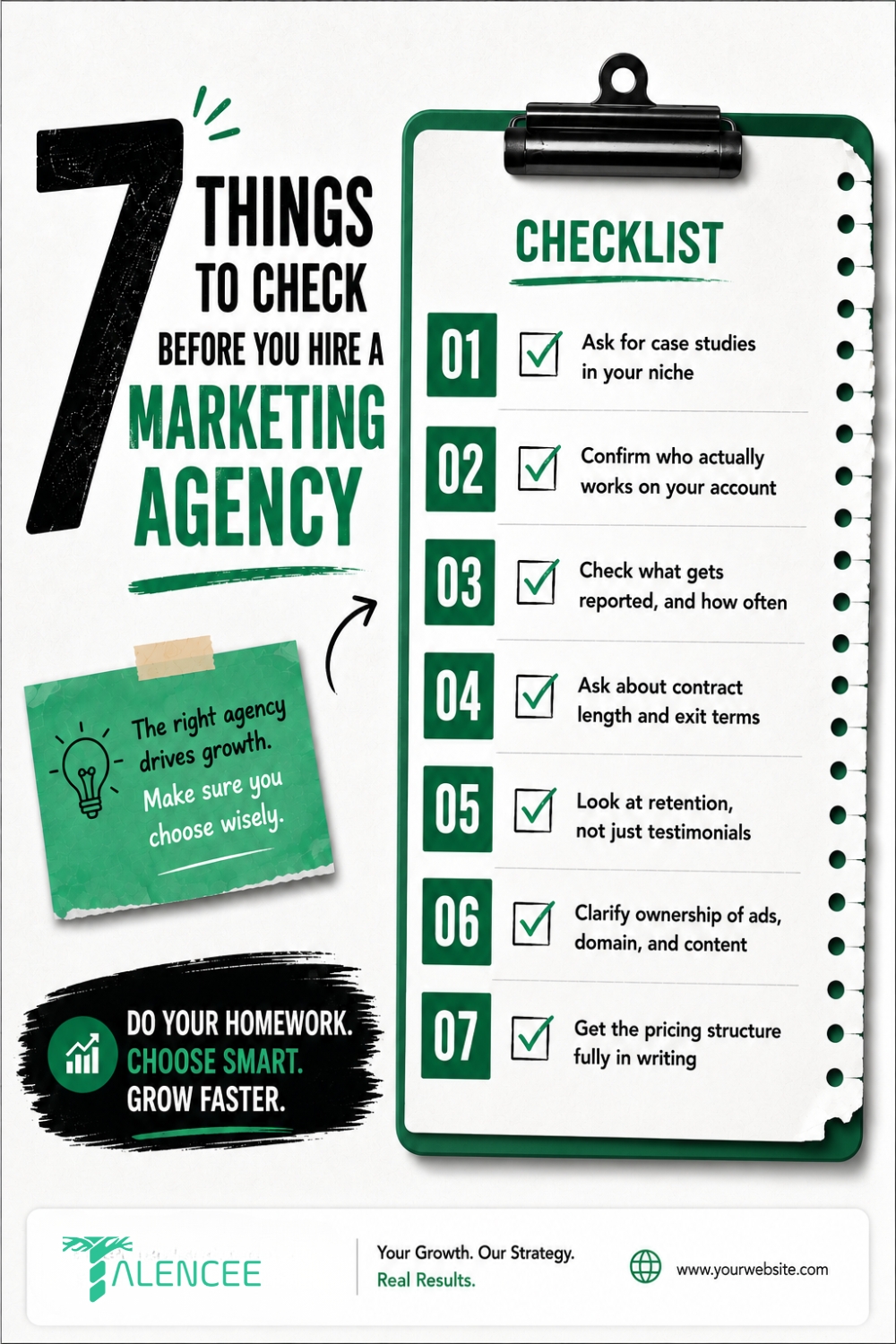
Run through these seven questions before you commit to any agency, no matter how good the pitch deck looks.
• Ask for case studies in your specific niche, not generic ones. A portfolio full of unrelated industries tells you less than one relevant result.
• Find out exactly who will work on your account day to day. The person pitching you is rarely the person doing the work.
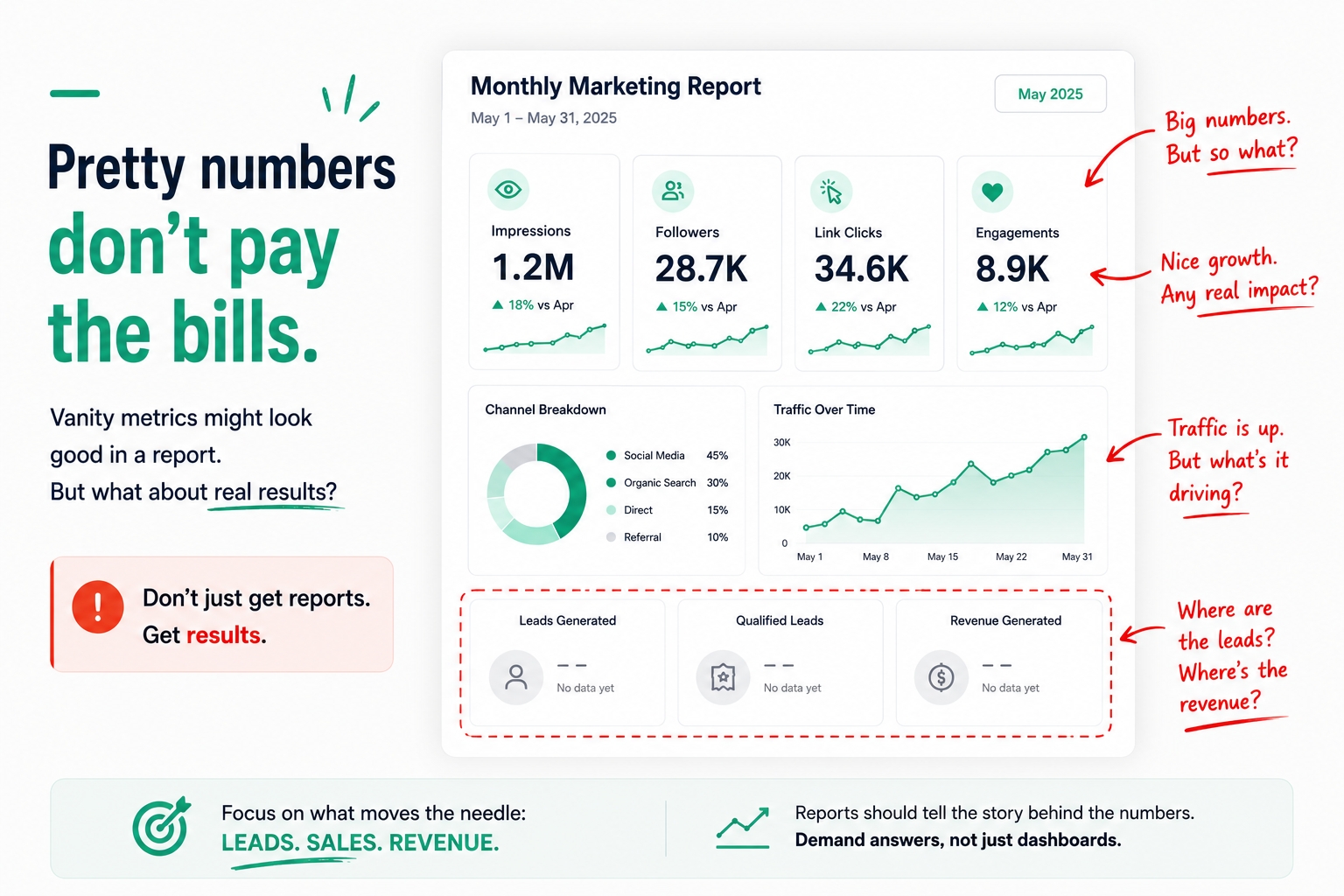
• Confirm what gets reported, and how often. Reports should center on leads, sales, or revenue, not just impressions or reach.
• Ask about contract length and what leaving actually looks like. A short trial period with clear exit terms protects both sides.
• Check client retention and independent reviews, not just testimonials on their own website.
• Clarify who owns your ad accounts, domain, and creative assets if the relationship ends.
• Get the full pricing structure in writing, whether it's retainer, project-based, or performance-based, before you sign anything.
5 Red Flags That Signal a Bad Agency
Some warning signs show up before you've even signed a contract.
• They guarantee exact rankings or results by a specific date. SEO typically takes 3 to 6 months to show meaningful ranking movement; anyone promising faster is either overpromising or cutting corners.
• Their sample reports lead with impressions or follower counts instead of leads or revenue.
• Account managers rotate frequently, or your questions get routed through junior staff with no real authority.
• They're vague or evasive about who owns your domain, ad accounts, or content.
• The contract locks you in long-term with no clear, reasonable exit clause.
Does It Matter If the Agency Is Based in Gurgaon?
If you're comparing options in Gurgaon's crowded agency market, location is worth a moment's thought, though it shouldn't be the deciding factor on its own.
A locally based agency usually understands the competitive landscape, local search behavior, and regional customer habits without you having to explain it from scratch. In-person meetings are easier to arrange, which matters if your business depends on foot traffic or local partnerships.
A remote or national agency can offer deeper specialization or better pricing, especially if your business operates fully online or serves customers outside the region. Weigh this based on how much your growth depends on local presence versus digital reach alone.
A Quick Question List for Your Discovery Call
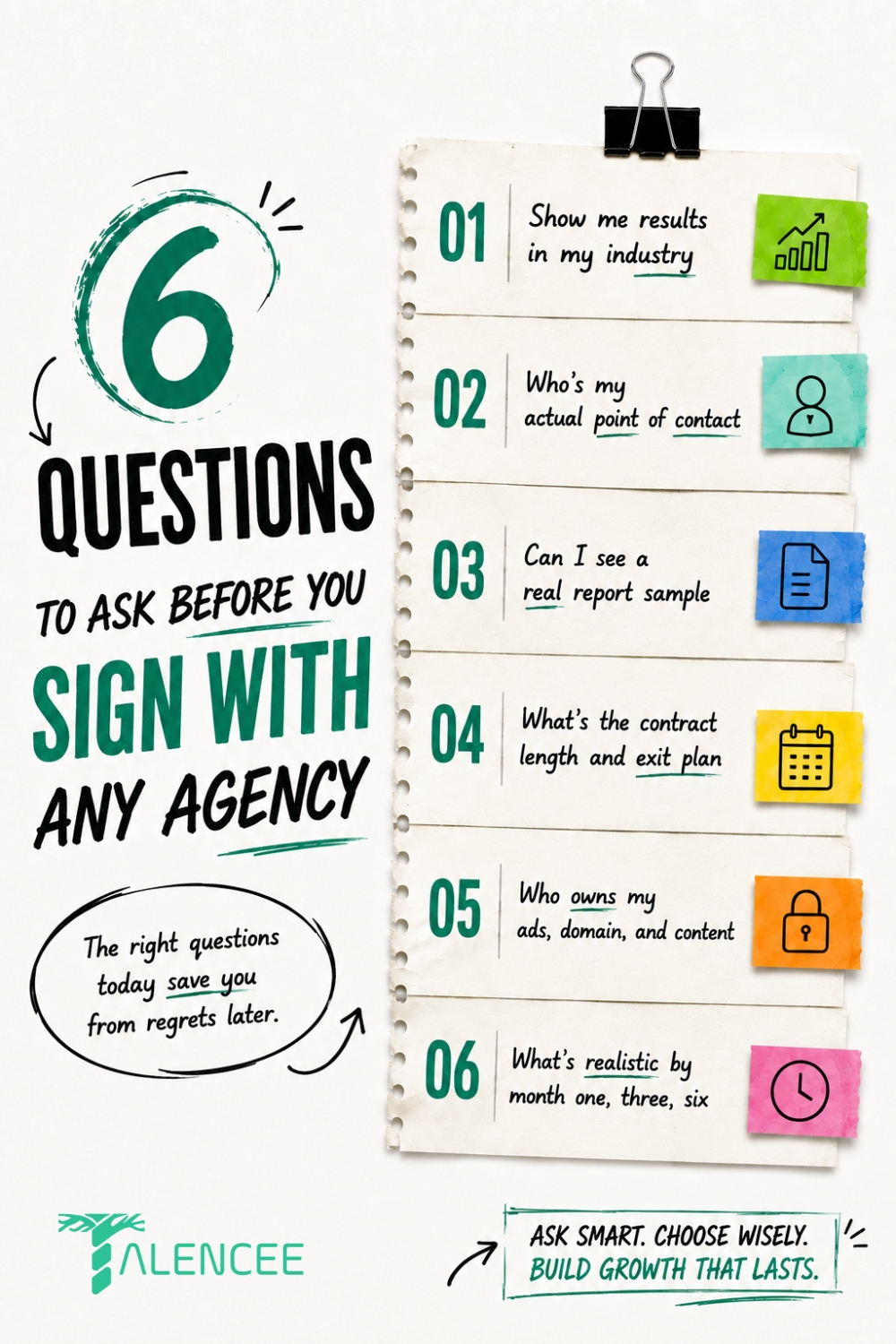
Bring these questions to your first call. A good agency will answer all of them clearly and without hesitation.
• Can you show me results for a client in my industry, not just your top logos?
• Who exactly will be my point of contact, and how often will we actually speak?
• What does a typical monthly report look like? Can I see a real sample?
• What's the contract length, and what happens if I want to leave after three months?
• Who owns the ad accounts, domain, and creative assets, my business or yours?
• What's realistic to expect in month one, month three, and month six?
FAQ
How much does a digital marketing agency typically cost?
Costs vary widely by scope and city, but small businesses typically pay anywhere from a modest monthly retainer for a narrow service, like social media management, up to a significantly larger monthly spend for full-service marketing. Get at least three quotes with identical scope before comparing prices.
What's the difference between a retainer and a project-based contract?
A retainer is an ongoing monthly relationship, usually with lower churn and more continuity. A project-based contract covers a defined deliverable with a clear end date, which suits one-off needs like a website launch but less suits ongoing growth work like SEO.
How long should I give an agency before judging results?
Most channels need 3 to 6 months before results stabilize enough to judge fairly. Judging too early is one of the most common reasons businesses switch agencies unnecessarily.
Should I hire a specialist agency or a full-service one?
If one channel, like SEO or paid ads, is your biggest priority, a specialist often goes deeper than a generalist covering ten services at once. If you need coordinated strategy across channels, a full-service agency reduces coordination overhead.
What happens to my rankings or ads if I switch agencies?
With proper handover, meaning domain access, ad account ownership, and historical data, a transition over 6 to 8 weeks typically preserves most of your progress. Rushed, overnight switches risk losing 30 to 40% of organic traffic during the transition, according to agency transition data reported by HubSpot.
Vetting an agency properly takes an afternoon. Living with the wrong one costs months. If you'd rather skip the guesswork, here's what working with our team at Talencee actually looks like.
Sources
Clutch, Small Business Marketing Survey, 2024
Marketing Agency Statistics 2026, client lifespan and churn rate benchmarks by contract type and agency size
HubSpot agency transition and organic traffic data, cited via Migliore Agenzia, 2026
Industry-standard SEO ranking timeline benchmarks (3 to 6 months for meaningful movement)