Google Ads vs Meta Ads: Which Should Your Business Actually Use?
By Harsh Rai
Google Ads vs Meta Ads compared: how each works, 2026 benchmark data, how to split a budget and how to measure results across both.
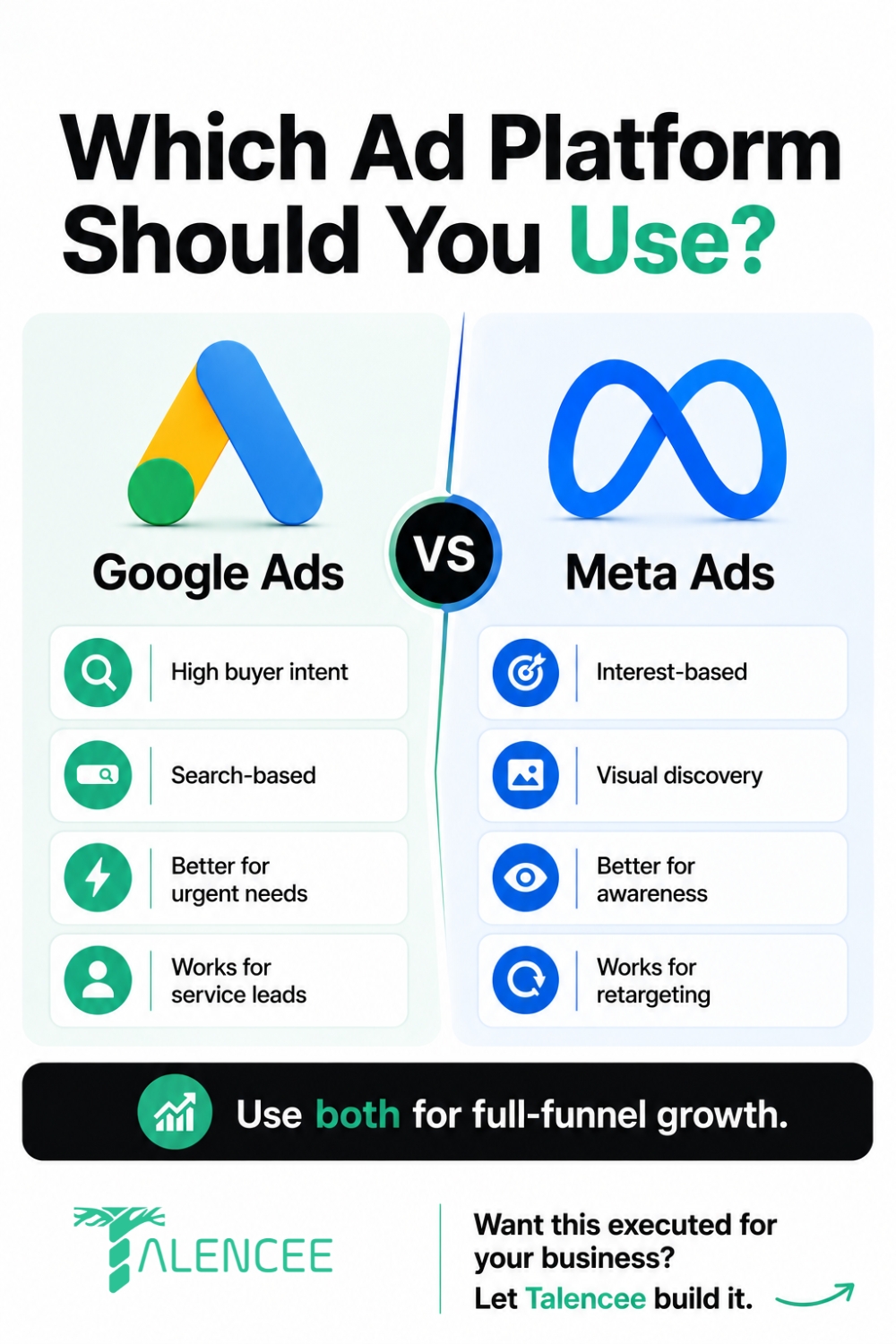
Google Ads vs Meta Ads is not an either-or choice for most businesses. The two platforms solve different problems, so the honest answer is usually both. Google Ads captures people who are actively searching for a solution right now, which makes it the stronger channel for urgent needs and service leads. Meta Ads reaches people based on interests and behavior before they search, which makes it stronger for visual discovery, brand awareness and retargeting people who have already shown interest. Treating Google Ads vs Meta Ads as a single choice usually leaves one entire half of the funnel uncovered.
The confusion mostly comes from comparing the wrong numbers. Meta's clicks are consistently cheaper, but a cheaper click and a cheaper customer are not the same thing. Mixing the two up is how budget decisions go wrong. This guide explains how each platform works, what the 2026 benchmark data says, how to split a budget between them and how to measure results honestly when both platforms claim credit for the same sale.
Quick note: We are Talencee, and we manage Google and Meta campaigns, so we have a stake in this question. We have tried to show the trade-offs fairly. The benchmark figures below come from US campaigns, so costs in India will differ. Use the numbers to compare platforms, not to set your budget.
How Google Ads Actually Works
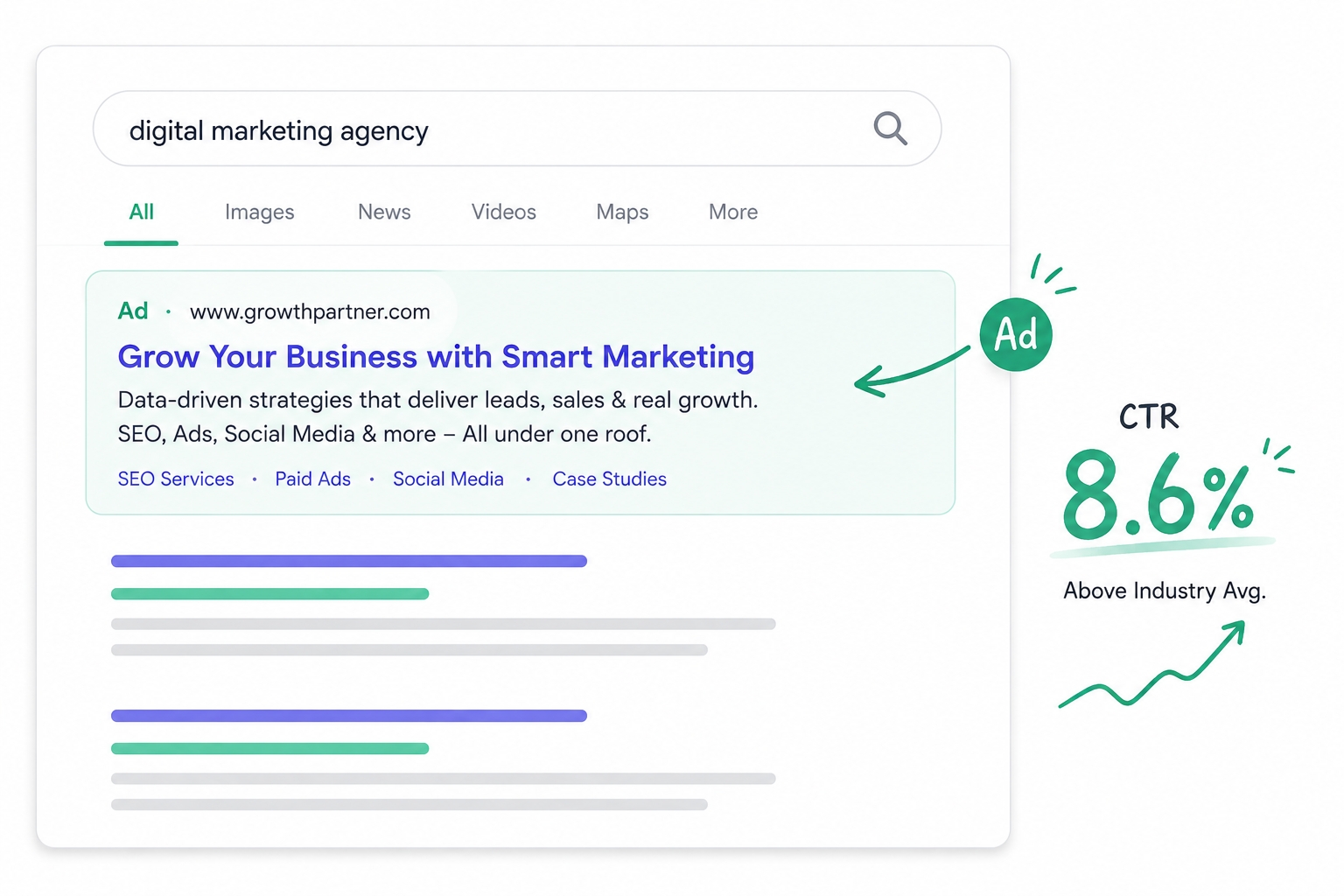
Understanding Google Ads vs Meta Ads starts with how each one finds customers. Google Ads targets based on what someone types into the search bar. It captures existing demand instead of creating it. Someone searching "emergency plumber near me" already has the problem and the intent. The job of Google Ads is to be the answer they see first.
Google Ads runs on several surfaces. Search ads appear in results. Shopping ads show products. YouTube and Display reach people across videos and websites. Performance Max and similar automated formats mix several of these. For most service businesses, Search ads are the core.
The 2026 benchmark report from WordStream and LocaliQ, which covers more than 13,000 search campaigns, gives a useful picture. It reports an average click-through rate of about 6.64%, an average cost per click of about $5.42 and an average conversion rate of about 8.18% for search ads. You can read the data in the 2026 Google Ads benchmarks. Those averages blend Google and Microsoft search campaigns and vary a lot by industry. A rival study may show different numbers, because definitions of "conversion" differ. Use benchmarks as sanity checks, not targets.
What matters most is the pattern: search clicks cost more, but they convert well, because the person is already looking for what you sell. If you run a service business that needs leads, see our Google Ads management service.
How Meta Ads Actually Works
Meta Ads targets based on interests, behavior and demographics across Facebook, Instagram, Messenger and, increasingly, Threads. It reaches people before they are searching for anything. That makes it a strong channel for visual products, brand discovery and staying in front of people who visited your site but did not convert.
In the Google Ads vs Meta Ads cost comparison, the pattern is reversed. In a 2026 summary of PPC benchmarks, Whatagraph reports average Facebook and Meta click costs of about $0.70 on traffic campaigns and about $1.92 on lead campaigns, with a click-through rate near 1.71%. Click costs are much lower than search, but clicks come from people who were not looking for you. They convert differently from people who typed your service into Google.
For many Indian businesses, one Meta format deserves special attention: ads that open a WhatsApp chat. They fit how customers already prefer to talk to businesses. They also need a plan for who replies and how fast, or the leads will go cold. See our Meta Ads management service for how we run these.
The trade-off is intent. A cheap click from someone who was not looking for you converts differently from an expensive click from someone who was. This is why comparing the two platforms on cost per click alone misses the point.
Side-by-Side Comparison
Here is the Google Ads vs Meta Ads comparison in one view.
Factor | Google Ads | Meta Ads |
Targeting basis | Search intent and keywords | Interests, behavior and demographics |
Best for | Urgent needs, service leads, B2B | Awareness, visual discovery, retargeting |
Typical click cost (2026 US benchmarks) | Higher, about $5 for search | Lower, about $0.70 to $1.92 |
Typical conversion rate | Higher, driven by existing intent | Varies widely by objective and creative |
Funnel stage | Middle to bottom | Top to middle |
Ad formats | Text, Shopping, video, some display | Image, video, carousel, Stories, Reels |
What drives results | Keyword intent and landing page quality | Creative quality, offer and audience testing |
Learning period | Needs conversion data for automated bidding | About 50 results per ad set in 7 days to exit learning |
When to Prioritize Google Ads
In the Google Ads vs Meta Ads decision, put Google Ads first when:
• Urgent, local or emergency services. People search for these the moment they need them, such as same-day repairs or medical care.
• High-ticket B2B or B2C purchases. People actively research and compare options before they buy.
• Categories where being the first result matters. Being there at the exact moment of need counts more than broad reach.
• Businesses with clear search demand. If people already search for your service by name, you should be there.
When to Prioritize Meta Ads
In the Google Ads vs Meta Ads decision, put Meta Ads first when:
• Visually appealing products. Image or video makes the product easy to want, and seeing it drives interest.
• New businesses with little search demand. Awareness has to come first.
• Retargeting. Reach people who visited your site or engaged with content but did not convert.
• Offers that suit a chat. Ads that open WhatsApp suit quotes, bookings and enquiries.
Google Ads vs Meta Ads by Business Type
Business type | Usually start with | Add next |
Emergency or same-day local service | Google Ads | Meta retargeting |
Clinic, salon or local studio | Google Ads plus Meta for offers | Reviews and retargeting |
B2B service firm or software company | Google Ads | Meta retargeting and content ads |
E-commerce store with visual products | Meta Ads and Google Shopping | Retargeting on both |
New brand with no search demand yet | Meta Ads | Google branded search as awareness grows |
Real estate, education or other high-ticket lead generation | Both from the start | Offline lead tracking |
These are starting points to test, not rules. Your own data should decide.
Using Google Ads and Meta Ads Together
The best answer to Google Ads vs Meta Ads is usually a connected setup. The strongest setups treat these platforms as connected, not competing. Meta builds awareness and warms up an audience. Google captures that same audience once they start actively searching, sometimes for your business by name. Google retargeting can then close the loop on visitors who came from Meta but did not convert on the first visit. Meta retargeting can do the same for people who clicked a Google ad but left.
One honest caveat: attribution across platforms is messy. Both platforms will often claim credit for the same conversion, so their dashboards do not add up neatly. Do not trust either platform's self-reported numbers in isolation. Look at total business results instead.
How to Split a Budget in Google Ads vs Meta Ads
There is no universal split. A better question is: how much budget does each platform need to work properly?
Start with the learning math. On Meta, an ad set needs about 50 results within seven days to exit its learning phase, according to Meta's own guidance on the learning phase. Until then, costs and delivery are less stable. A simple rule of thumb for the minimum daily budget per ad set is:
(target cost per result x 50) / 7
Here is an illustrative example, not a benchmark. If you aim for ₹500 per lead, one ad set needs roughly ₹500 x 50 / 7, or about ₹3,600 a day, to collect 50 leads in a week. That is a good reason to run fewer, better-funded ad sets instead of many small ones.
Then consider these starting points. They are suggestions to test, not industry rules.
Situation | Possible starting split | Why |
Urgent local service | More on Google Ads, a smaller Meta budget for retargeting | Most demand is already searching |
B2B services | Mostly Google Ads, with a modest Meta retargeting budget | Buyers research, then compare |
Visual e-commerce | More on Meta Ads, with Google Shopping and brand search | Discovery drives interest |
New brand | More on Meta Ads at first, then add Google as search demand grows | Awareness comes before searches |
Review in cycles, not days. Give each campaign time to gather data, often four to six weeks, before moving money between platforms. Frequent switching resets the learning process and hides what works.
Common Budget-Split Mistakes in Google Ads vs Meta Ads
• Putting the entire budget into whichever platform looks cheaper per click. Check the cost per actual customer, not just the cost per click.
• Judging Meta by the same benchmarks as Google. The two platforms serve different funnel stages and different buyer mindsets.
• Never testing retargeting. It is often among the most efficient segments on both platforms, and it gets skipped in favour of chasing new audiences.
• Splitting a small budget into too many campaigns. Each campaign then gets too little data to learn.
• Switching budget every month. Short-term swings are not proof that a platform has stopped working.
• Sending ad traffic to a weak landing page. Great ads cannot fix a slow or confusing page.
A Quick Example
A home services business running only Google Ads might capture every urgent "need it today" search. It would still miss the much larger group of homeowners who will need the same service in the next few months and have not started searching yet.
Adding a modest Meta budget aimed at that second group helps. So does retargeting anyone who visited the site from a Google click but did not book. Together, they typically fill in both ends of the funnel that a single-platform strategy leaves exposed.
Tracking Setup: What to Do Before You Spend
Both platforms need good data to optimise, and you need your own data to judge them. Set these up first:
1. Conversion tracking on each platform. Track real actions, such as form submissions, calls and WhatsApp chat starts, not just clicks.
2. Consistent UTM parameters on every ad link, so your analytics shows which campaign sent each visitor. Google explains how to tag campaign URLs.
3. Server-side or enhanced conversion tracking, where possible, so browser privacy settings lose fewer conversions.
4. Call tracking, if phone calls matter to your business.
5. A way to import offline results. Phone sales, store visits and booked appointments are invisible to both platforms by default, so both will undercount real results.
6. A single sheet or dashboard that combines spend and results from both platforms. Our BI dashboards and reporting service builds these.
How to Measure Success Across Both Platforms
Since attribution overlaps, judging Google Ads vs Meta Ads by each platform's own dashboard leads to bad decisions. A few practices make the comparison more honest:
• Track blended cost per customer across both platforms combined, not just each platform's self-reported return in isolation.
• Use your own analytics as the source of truth for what actually converted.
• Compare lead quality, not only lead volume. Ask the sales team which leads became customers.
• Give new campaigns a minimum testing window, typically four to six weeks, before judging performance.
• Watch the trend, not single days.
Privacy and Consent Basics for Retargeting
Retargeting and conversion tracking use personal data. India's Digital Personal Data Protection Act, 2023 may apply. The government notified the DPDP Rules in November 2025, with a phased rollout, and you can read the official summary in this Press Information Bureau document. In practice, tell visitors what you track, ask for consent where required, keep your privacy policy up to date and use only the data you need. This is general information, not legal advice. Please take legal advice for your situation.
Frequently Asked Questions
Google Ads vs Meta Ads: which is cheaper?
Meta's cost per click is almost always lower, but cost per click is not the same as cost per customer. Google's higher-intent clicks often convert well enough to make the effective cost per customer competitive, or even lower, depending on the industry.
Which is better, Google Ads or Facebook Ads?
Neither is better in every case. Google Ads suits people who are already searching, and Meta Ads suits discovery and retargeting. Most businesses get the best results from using both.
Can a small business run both Google Ads and Meta Ads at the same time?
Yes, and it is usually the better approach even on a modest budget. A common pattern is a smaller Meta budget for awareness and retargeting alongside a Google budget focused on a tight set of high-intent keywords. Start narrow instead of spreading a small budget too thin.
Which is better for local service businesses?
Google Ads usually wins for urgent, high-intent local searches, such as emergency repairs or same-day services. Meta works well alongside it for staying visible to people in the area who are not searching yet.
How much budget do I need to start?
It depends on your industry, competition and the cost of a customer. Work backwards from the cost per result you want and the number of results each campaign needs to learn. Use the learning math above, and test before scaling.
Which platform is easier for beginners?
Meta's interface and creative-first approach often feel more approachable at first. Google Ads' intent-based targeting often gives clearer, faster feedback on what is working. Beginners often do well starting with one platform and learning it properly.
How do I know a campaign is working if both platforms claim credit for the same sale?
Rely on your own analytics and consistent UTM tracking instead of either platform's numbers alone. Look at total business results and blended cost per customer across both platforms.
How long should I wait before judging a campaign?
Typically four to six weeks, so that both platforms can leave their learning phase and optimise. Avoid big edits during that time, because major changes can restart learning.
Conclusion
Google Ads vs Meta Ads is rarely a contest with one winner. Google Ads captures demand that already exists. Meta Ads creates and warms demand that has not yet started searching. Most businesses need both, in proportions that depend on their category, their budget and the quality of their tracking.
Start with the platform that fits your most urgent need, fund it well enough to learn, set up your own tracking and add the second platform when you are ready. Judge the results by total business outcomes and blended cost per customer, not by each dashboard in isolation.
Running both platforms well, and reading the combined results instead of each dashboard separately, is where most small businesses need the most help. If that is where you are, explore our Google Ads and Meta Ads management, or contact us to talk through your goals.
Sources and Further Reading
• WordStream and LocaliQ, 2026 Google Ads benchmarks. Search click-through rate, cost per click and conversion rate from more than 13,000 US campaigns.
• Whatagraph, PPC benchmarks 2026. Facebook and Meta cost per click and click-through rate summary.
• Meta Business Help Center, learning phase guidance. About 50 results within 7 days per ad set.
• Google Analytics Help, Collect campaign data with custom URLs. UTM parameters.
• Google Ads Help, official help center. Bidding, conversion tracking and offline conversion import.
Press Information Bureau, DPDP Rules, 2025 summary.